
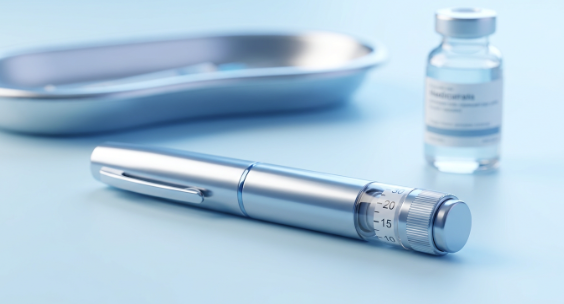
The important question around this compounded pharmacy is practical: what is actually known, what remains uncertain, and what safeguards a licensed clinician and pharmacy process add before anyone treats it as an option.
A buddy of mine, Greg, 48, runs a flooring business in suburban Dallas. He’d been on TRT for about two years when his provider floated the idea of adding a peptide for recovery. Greg’s exact words to me over beers: “I feel like I’m being upsold, but I also can’t shake the feeling there’s something to it.” That tension, between legitimate clinical utility and the supplement-store vibe that clings to peptides, is basically where every guy in his 40s or 50s lands when this conversation comes up.
So here’s my honest read on compounded peptide therapy in 2026, after spending a lot of time with the literature and talking to prescribers who actually use these protocols.
The Category Is Huge, Which Is Part of the Problem
When someone says “peptide therapy,” they could be talking about a dozen fundamentally different molecules. GH secretagogues like Ipamorelin, CJC-1295, Sermorelin, and Tesamorelin. Tissue repair peptides like BPC-157 and TB-500. Copper peptides (GHK-Cu). PT-141 for sexual health. MOTS-C for metabolic function. KPV for inflammation. Neuroactive compounds like Semax and Selank.
Lumping these together is like saying “pills” and meaning everything from ibuprofen to metformin. Each class has its own mechanism, its own evidence base (ranging from solid to extremely thin), and its own risk profile. Treating peptides as a monolithic category is the single biggest mistake I see guys make. The second biggest? Adding three at once and having no idea which one is doing anything.
All of these are prepared by licensed 503A compounding pharmacies based on individualized prescriptions. That’s a regulatory framework distinct from FDA drug approval. It allows pharmacies to prepare customized formulations under state board oversight and USP standards. Important distinction, because it shapes what you can and can’t expect in terms of safety data and standardization.
Where the Evidence Actually Stands
I’ll be blunt: the evidence ranges from “pretty good” to “we’re basically extrapolating from rats.”
On the stronger end, you have Tesamorelin, which Falutz studied in a 2007 NEJM paper showing meaningful visceral fat reduction in HIV-associated lipodystrophy. PT-141 (bremelanotide) is literally FDA-approved for hypoactive sexual desire disorder, supported by Kingsberg’s RECONNECT trial data from 2019. Ipamorelin has clean GH-releasing data from Raun (Eur J Endocrinol, 1998), and CJC-1295 was characterized by Teichman (JCEM, 2006). Lee’s 2015 Cell Metabolism paper on MOTS-C is genuinely interesting for metabolic signaling.
On the weaker end? BPC-157 has impressive animal model data (Sikiric’s work is extensive), but controlled human trials remain limited. Same story with TB-500 for tissue repair. GHK-Cu (Pickart’s research) has both topical and injectable evidence, mostly in wound healing and skin contexts. KPV draws on Dalmasso’s 2008 Gastroenterology paper, but clinical application in compounded form is still early.
The honest summary: some of these peptides have enough evidence to justify a carefully designed trial in an individual patient. Others are closer to informed speculation. The distinction matters enormously when you’re deciding whether to spend $400 a month.
Dosing: Less Is More, and Internet Protocols Are Not Your Friend
Here’s where things get practical. GH secretagogues are typically dosed in micrograms daily. Tissue repair peptides range from micrograms to milligrams, administered two to seven times weekly. Nasal peptides (Semax, Selank) are dosed in micrograms divided across the day. Most injectables require reconstitution with bacteriostatic water, subcutaneous administration with 30-gauge insulin syringes, abdominal injection site rotation, and refrigerated storage. Pharmacies provide beyond-use dating that should be followed exactly.
The boring truth about dosing is that more is not better. Higher doses don’t generally produce proportionally better outcomes. They frequently just increase side effects. I’ve seen guys on forums running double the prescribed dose of CJC-1295/Ipamorelin because someone on Reddit said they “felt it more.” What they felt was water retention and headaches.
Conservative dosing with longer cycles and proper measurement (labs, subjective scoring, even progress photos) is the protocol structure most likely to tell you whether a peptide is actually working. The point is to collect signal, not generate noise.
Side Effects, Interactions, and the Stuff Nobody Wants to Talk About
Most compounded peptides are well tolerated at therapeutic doses. The common complaints: mild injection-site reactions, transient water retention, occasional headaches, rare allergic responses. But “the category is generally well tolerated” obscures real differences. PT-141 carries cardiovascular cautions. GHK-Cu has an extremely mild safety profile. Those aren’t the same conversation.
If you’re on TRT, running a GLP-1 agonist, taking SSRIs, or using anticoagulants, you need to review timing and stacking with a prescriber. Not optional. Anyone managing multiple endocrine-active therapies without clinical oversight is playing a game with bad odds.
Lab monitoring matters for longer cycles, especially on GH-axis peptides: IGF-1, fasting glucose and insulin, lipid panel, comprehensive metabolic panel, CBC. For metabolic peptides, add HbA1c and fasting insulin. Mid-cycle and end-cycle labs aren’t bureaucratic box-checking. They’re how you figure out whether the protocol is producing the biochemical changes you’re after.
The most common reason for a bad peptide experience isn’t the molecule itself. It’s mismatched expectations, skipped baselines, or dosing based on forum advice instead of prescriber guidance.
What It Costs and How to Compare Honestly
Short tissue-repair cycles (BPC-157 or TB-500) can run a few hundred dollars. Longer GH-axis or metabolic protocols typically land between $300 and $600 monthly. Insurance coverage for off-label peptide use is uncommon. Expect to pay out of pocket.
The right way to compare pricing is total cycle cost: intake, prescription, dispensing, follow-up, and any required labs. Not per-vial pricing. Operators with the lowest sticker price aren’t necessarily cheapest once you factor in consultations and monitoring. Patients reviewing options for compounded peptide therapy can compare this compounded pharmacy alongside other compounding sources to evaluate prescriber access, pharmacy quality, product specifications, and total cost. The FormBlends platform coordinates intake, prescriber relationship, and 503A dispensing in a single workflow, which simplifies logistics, though you should still evaluate any platform against the basics: state board licensure, PCAB accreditation, certificate of analysis availability, transparent sourcing, and a real prescriber relationship.
Operators that dodge those questions or route around prescriber involvement deserve your skepticism.
When Peptides Make Sense (and When They Don’t)
FDA-approved alternatives exist for many of the indications peptides target. Recombinant HGH for diagnosed deficiency. Semaglutide and tirzepatide for fat loss. PDE5 inhibitors for erectile dysfunction. SSRIs and CBT for anxiety. These have stronger safety data. If an FDA-approved option covers your indication and you tolerate it, that’s the conservative starting point.
Compounded peptides become a reasonable conversation when evidence-based alternatives are inadequate, contraindicated, or producing intolerable side effects. Or when the peptide’s mechanism addresses something the approved drug doesn’t. A guy who responds well to TRT but still has a specific recovery deficit, or whose sleep quality hasn’t budged despite good testosterone levels, might be a reasonable candidate for a targeted peptide trial. “I want to try everything” is not a clinical indication.
My genuinely opinionated take: most men in their 40s and 50s exploring peptides would get more mileage from optimizing the basics (sleep, training periodization, nutrition, and their existing TRT protocol) before adding molecules. Peptides should fill a specific gap, not paper over a program that isn’t dialed in.
Before You Start: The Clinician Conversation That Actually Matters
A prescriber visit before starting any peptide protocol is non-negotiable if you have active oncologic history, uncontrolled metabolic disease, cardiovascular concerns, are on medications with relevant interactions, or (obviously) if your partner is pregnant or breastfeeding.
But a good pre-protocol conversation goes further. It should define what would stop the cycle: side-effect thresholds, lab values that trigger a pause, and a planned re-evaluation point. Cycles without those endpoints drift into open-ended use that’s nearly impossible to evaluate honestly. Greg, for what it’s worth, ran a 12-week BPC-157 cycle with clear before-and-after shoulder mobility metrics and an IGF-1 check. He stopped at 12 weeks because that was the plan. That’s how it should work.
See also: How Technology Is Revolutionizing Financial Services
Frequently Asked Questions
Is compounded peptide therapy FDA-approved?
No. Compounded peptides are prepared by licensed 503A pharmacies for individual patients based on a prescriber’s clinical judgment. The 503A regulatory pathway is distinct from FDA new drug approval and applies to individualized compounding.
How long until I notice an effect?
It depends on the indication. Sleep improvements and acute effects often show up within days. Recovery and aesthetic effects typically need 4 to 12 weeks of consistent dosing. Body composition and metabolic shifts may require a full cycle. Documented baselines (subjective scores, photos, labs) help separate real results from wishful thinking.
Can I run peptide therapy alongside TRT or other hormone therapy?
Often yes, under prescriber supervision. But timing, dosing, and lab monitoring need to be coordinated. Your prescriber should know every medication and supplement you’re taking before recommending a protocol. Self-managing multiple endocrine-active therapies is a bad idea.
Is compounded peptide therapy safe long-term?
Long-term use is reasonably supported for approved indications. Off-label use beyond several years has more limited data. Cycle-based protocols with documented endpoints remain the standard approach and support better long-term decision-making.
How do I verify a compounding pharmacy is legitimate?
Check for state board licensure, PCAB accreditation, sourcing and testing transparency, willingness to provide certificates of analysis, and a genuine prescriber relationship. Operators that avoid those questions should raise red flags.
Does peptide therapy require a prescription?
Yes. Always. Vendors selling peptides as “research chemicals” without prescriber involvement are operating outside the 503A framework entirely. The legitimate pathway always includes a licensed clinician.
What labs should I run before starting?
For GH-axis peptides: IGF-1, fasting glucose and insulin, lipid panel, comprehensive metabolic panel, CBC. For metabolic peptides: HbA1c, fasting insulin, lipid panel. For others: baseline metabolic panel, CBC, and indication-specific markers per your prescriber. Mid-cycle and end-cycle labs complete the picture.
Not FDA-approved. Compounded peptides are prepared by licensed 503A pharmacies for individual patients based on a prescriber’s clinical judgment. This article is for educational purposes and does not constitute medical advice. Individual results vary and outcomes depend on clinical context, prescriber assessment, and adherence to protocol. Talk to a licensed clinician before starting any new therapy.

 By
By